Quick Chicken and Rice Skillet with Exact Portion Measurements
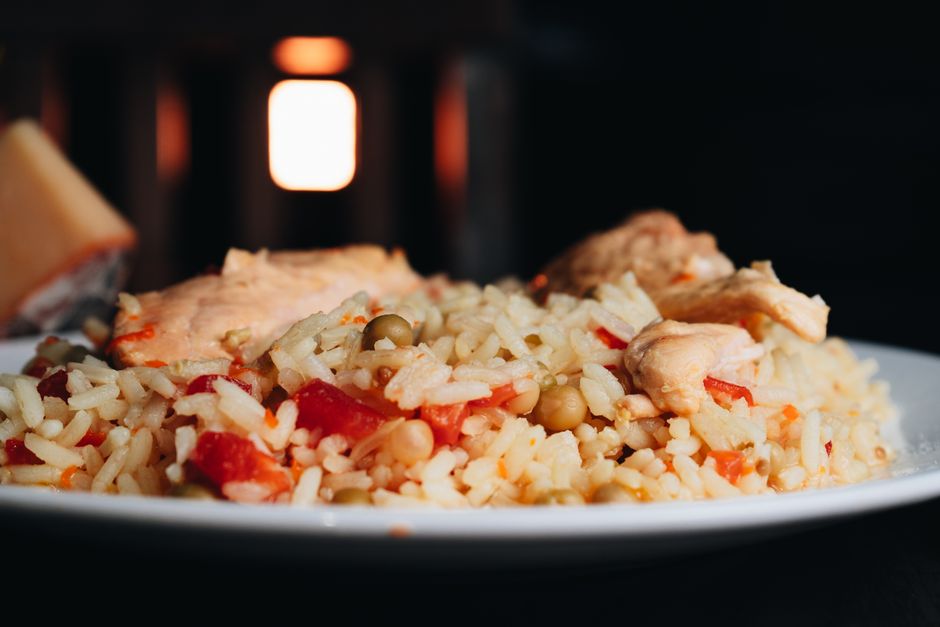
A chicken and rice skillet is a one-pan main dish in which chicken pieces and rice cook together in a measured amount of liquid, usually broth, so that the rice absorbs flavor while the chicken finishes at the same time. Because everything happens in a single vessel, the quantities matter more than they do in a dish where components are cooked separately and combined at the end. The ratio of rice to broth, the size of the chicken pieces, and the heat level together determine whether the finished skillet has separate, tender grains or a dense, uneven texture.
This article outlines a process-oriented approach to the dish. It covers measured amounts for chicken, rice and broth, the order in which ingredients go into the pan, and timing markers that help a cook judge progress without relying on guesswork. The emphasis is on method and observation rather than on a single fixed outcome, since pan size, burner strength, and ingredient temperature all vary between kitchens and households.
The target context is the busy weeknight, when a single pan and a predictable sequence of steps are convenient. The amounts below are written for a standard home skillet and can be adjusted proportionally, though any adjustment changes cooking time and should be treated as a new set of conditions rather than a minor edit.
Measured Amounts for Chicken, Rice and Broth
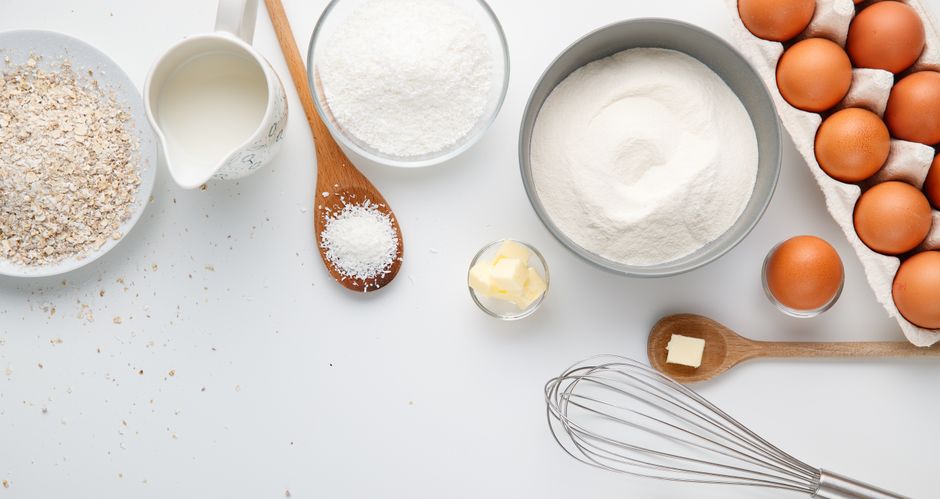
The foundation of a consistent skillet is a clear starting set of quantities. A common working baseline for a 12-inch skillet with a lid is 1 pound of boneless, skinless chicken thighs or breasts, 1 cup of long-grain white rice, and 2 cups of broth. This reflects a roughly 1-to-2 ratio of rice to liquid by volume, which is typical for long-grain white rice cooked by absorption. Short-grain rice behaves differently and usually needs slightly less liquid, while brown rice needs more and a longer covered phase.
Chicken thickness is as important as chicken weight. A 1-pound batch cut into pieces about 1 inch thick cooks through in the time the rice needs to absorb the broth. Very thick pieces may remain underdone when the rice is ready, while very thin cutlets can dry out before the rice finishes. Trimming the chicken into even pieces is therefore a portioning step, not only a preparation step, and it supports the timing described later.
Broth volume should be measured in a liquid measuring cup rather than estimated, because the rice absorbs a fixed quantity of liquid and the remainder evaporates. If the broth volume is short, the rice may stay firm and stick to the pan; if it is excessive, the rice can become soft and the dish may not set. Aromatics such as onion or garlic release moisture, so when they are added in larger amounts, the broth is sometimes reduced slightly, but this should be recorded as a deliberate adjustment rather than an improvised one.
- 1 pound boneless chicken, cut into even 1-inch pieces
- 1 cup long-grain white rice, rinsed and drained
- 2 cups broth, measured in a liquid cup
- 1 to 2 tablespoons cooking oil for the sear
- Salt, pepper and seasonings measured to taste
Recording these amounts before cooking begins keeps the process transparent. A short note on the quantities used, the pan size, and the heat level provides a reference point for later attempts, which is more useful than relying on memory alone.
Order of Operations and Pan Setup
The sequence in which ingredients enter the pan shapes both texture and timing. Heating the pan before adding oil, then searing the seasoned chicken briefly on both sides, develops color and flavor that later blend into the rice. The chicken does not need to be fully cooked at this stage, since it finishes during the covered phase; the goal is surface browning and a head start on the interior.
After the chicken is removed, the rice is added to the same pan and stirred briefly in the remaining fat. This step coats the grains and allows them to toast lightly, which can help them hold their shape during absorption. Pouring the measured broth into the hot pan, then scraping the base to lift browned bits, incorporates those flavors into the liquid. The chicken is then returned to the pan in a single layer, partially submerged but not fully covered.
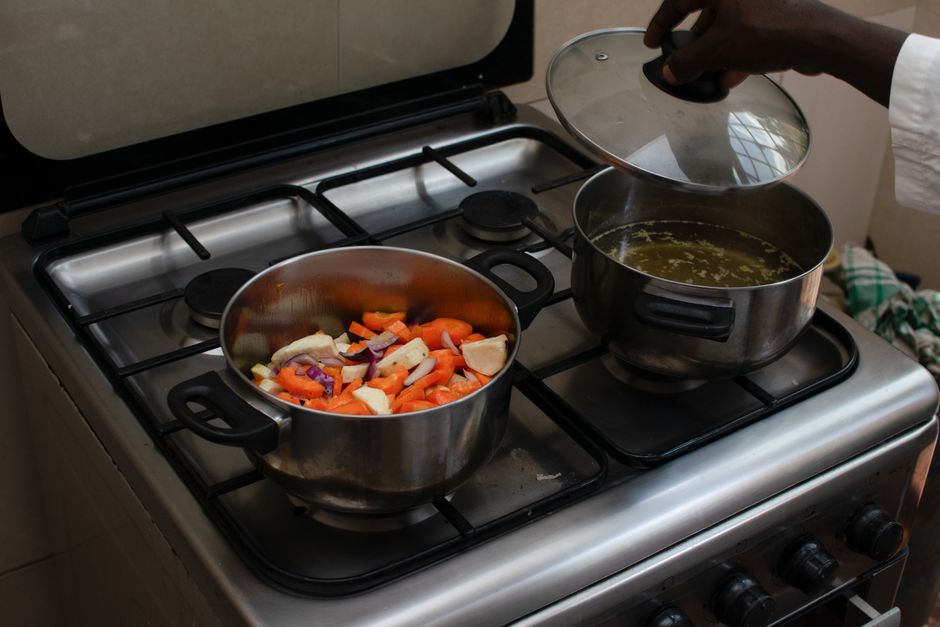
Lid fit is a practical detail worth checking. A lid that sits loosely allows steam to escape and changes the effective liquid ratio, while a tight lid traps moisture and supports even absorption. Placing the lid and lowering the heat to a gentle simmer are the two decisions that most influence the covered phase. If the pan is wider than the burner, the heat may concentrate in the center, which is one reason the pan is sometimes rotated partway through cooking.
Measured amounts set the starting conditions; the pan, the burner and the lid determine how those conditions actually play out.
Keeping the workspace organized supports this flow. Measured ingredients set out before the pan is heated reduce the need to search for items mid-process, and they make it easier to notice whether a quantity has been added once or twice. These are small habits, but they contribute to repeatability in a busy kitchen.
Timing Markers During the Covered Phase
Once the pan is covered and simmering, timing is best read through a combination of clock and observation. A typical white rice skillet reaches the end of its covered phase in about 18 to 22 minutes from the moment the broth begins to simmer, though this range shifts with pan material, heat level and the temperature of the ingredients. Setting a timer for the lower end of the range provides an early checkpoint rather than a finish signal.
At that checkpoint, lifting the lid briefly allows the cook to see whether the broth has been absorbed and whether the rice grains have opened along their length. A small taste of a grain from the edge of the pan, where cooking tends to be slower, gives more information than the center. If the rice is still firm and liquid remains, the lid goes back on for a few more minutes. If the rice is nearly ready but the liquid has not fully absorbed, an uncovered minute or two at low heat may allow the remainder to evaporate.
The chicken is checked at the same time. Pieces should be opaque throughout, and a thermometer inserted into the thickest piece offers a clearer reading than appearance alone. Because the chicken and rice share the pan, their finish times are linked; a skillet in which the rice is ready but the chicken is not usually points to pieces that were cut too thick or a pan that was overcrowded. Such observations feed back into the next attempt rather than indicating a failed method.
Resting is the final timing element. After the pan comes off the heat, a short rest of 5 to 10 minutes with the lid slightly ajar allows the rice to firm and the moisture to redistribute. This step is optional but tends to make plating cleaner and the texture more even.
Adjustments, Variations and Consistency Notes
Skillet cooking is sensitive to conditions that are easy to overlook. Pan diameter relative to the amount of food, burner output, the starting temperature of the broth, and whether the chicken came directly from the refrigerator all influence the final timing. When a skillet turns out drier or wetter than expected, the useful response is to note the variable that changed, because adjusting the broth without identifying the cause can move the dish further from the intended result.
Variations follow the same measured logic. Substituting brown rice requires a longer covered phase and additional liquid, while adding tomatoes or frozen vegetables introduces moisture that can be counted toward the broth total. Seasoning adjustments are largely independent of the cooking mechanics, though salt added to the broth distributes more evenly than salt added at the end.
Portion & Pantry frames this kind of cooking as a matter of documented quantities and repeatable steps rather than precise replication. Two cooks using the same amounts may still see different timing because their equipment differs, and treating the measured amounts as a starting reference supports judgment rather than replacing it. A written record of quantities, pan size, heat setting and observed timing builds a personal baseline over several attempts.
For weeknight use, the practical advantage of this approach is that the pan and the measured ingredients can be prepared in advance and cooked in one sequence at the end of the day. The dish does not require constant attention once covered, which leaves room for other tasks. Whether the result matches a particular preference depends on the cook’s own observations and adjustments over time, and the method is designed to make those adjustments visible and easy to track.