Scaling a basic bread recipe is a common task for home bakers who want to adjust loaf sizes to fit their household needs. Whether you are baking for a small household and want a smaller loaf or preparing bread for a larger group, understanding how to modify ingredient quantities while maintaining the balance of the recipe is essential. The process involves more than simple multiplication or division; it requires attention to flour-to-water ratios, yeast adjustments, and the overall dough consistency.
This article outlines a methodical approach to scaling a simple white bread recipe, focusing on the key variables that affect dough behavior. By following a structured process, you can adapt recipes with confidence, ensuring that your bread turns out as expected regardless of the batch size. The information provided is intended for educational purposes and assumes a basic familiarity with bread baking techniques.
Scaling a recipe is not just about math; it is about understanding how ingredients interact and how to maintain that interaction when quantities change.
Understanding the Basic Bread Recipe Structure
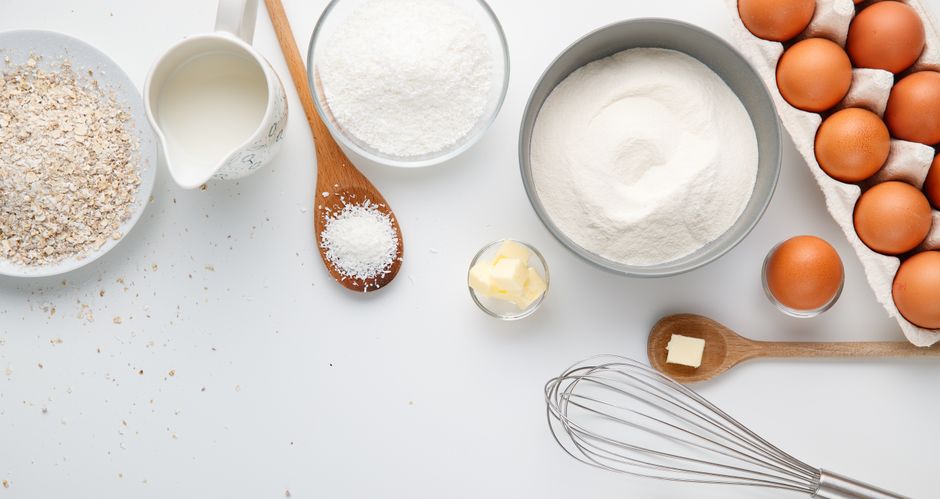
A basic white bread recipe typically consists of flour, water, yeast, salt, and sometimes a small amount of sugar or fat. The ratio of these ingredients determines the dough’s hydration, fermentation speed, and final texture. When scaling, it is crucial to recognize that not all ingredients scale linearly. While flour and water can be multiplied or divided proportionally, yeast and salt may require slight adjustments based on the desired fermentation time and dough mass.
The flour-to-water ratio, often expressed as a percentage (baker’s percentage), is the foundation of any bread recipe. In a simple white bread, the water weight is usually around 60-65% of the flour weight. This ratio can be maintained when scaling, but the total dough mass will change, affecting how the dough ferments and bakes. Similarly, yeast quantity is typically a small percentage of flour weight, and its adjustment depends on the fermentation environment and the desired timeline.
When doubling a recipe, you might assume that simply doubling all ingredients will work. However, larger dough masses can ferment more quickly due to increased thermal mass and yeast population. Conversely, halving a recipe may slow fermentation. Therefore, scaling requires a thoughtful approach that considers these dynamics.
Adjusting Flour-to-Water Ratios for Different Loaf Sizes
The flour-to-water ratio is the most critical factor in bread making, as it determines dough hydration and handling properties. When scaling a recipe, the ratio should remain consistent, but the total quantities change. For example, if a standard loaf uses 500 grams of flour and 300 grams of water (60% hydration), doubling the recipe would use 1000 grams of flour and 600 grams of water. Halving it would use 250 grams of flour and 150 grams of water. This linear scaling works well for flour and water, but it is important to measure by weight for accuracy, as volume measurements can introduce inconsistencies.
However, slight adjustments to hydration may be necessary when changing batch size. Larger batches can sometimes benefit from a marginally lower hydration to improve dough strength, while smaller batches might need a slightly higher hydration to compensate for faster moisture loss during baking. These adjustments are minor and depend on the specific flour and environment. It is advisable to start with the same ratio and observe the dough’s behavior, adjusting as needed based on feel and consistency.
Additionally, consider the type of flour used. Different flours have varying absorption capacities, so when scaling, you may need to tweak the water amount to achieve the desired dough texture. This is especially relevant when switching between brands or types of flour. Always mix the dough and assess its consistency before proceeding with fermentation.
Yeast Adjustments When Doubling or Halving
Yeast quantity is another critical variable that does not always scale linearly. In general, yeast is used at about 1-2% of flour weight in a simple bread recipe. When doubling a recipe, you might be tempted to double the yeast, but this can lead to faster fermentation and potentially over-proofing if not monitored. Instead, consider keeping the yeast percentage the same or slightly reducing it to allow for a more controlled fermentation. For example, if the original recipe uses 2% yeast, doubling the batch might use 1.8% yeast to account for the larger mass’s retained heat and faster yeast activity.
When halving a recipe, the yeast quantity can be kept at the same percentage, but you may need to adjust the fermentation time and temperature. Smaller dough masses can cool more quickly, potentially slowing fermentation. In such cases, using a slightly higher percentage of yeast (e.g., 2.2%) or providing a warmer environment can help maintain the timeline. However, increasing yeast too much can negatively impact flavor development, so it is a balance.
It is also important to consider the type of yeast. Instant yeast and active dry yeast have different potencies and require different handling. When scaling, ensure you are using the same type of yeast as the original recipe or adjust accordingly. For best results, always proof yeast in a small amount of water and sugar before mixing to verify its activity, especially when scaling significantly.
Practical Steps for Scaling a Recipe
To scale a basic bread recipe effectively, follow a systematic process. First, determine the desired total dough weight or loaf size. This could be based on pan dimensions or the number of servings needed. Then, calculate the required quantities of each ingredient using baker’s percentages, ensuring that the flour-to-water ratio and yeast percentage are maintained. Use a digital scale for precision, as volume measurements can lead to errors.
Next, mix the dough and observe its consistency. Adjust water or flour as needed to achieve a smooth, elastic dough. Pay attention to the dough’s temperature, especially when scaling up, as larger batches may require cooler water to prevent overheating during mixing. After mixing, follow the recipe’s fermentation and proofing steps, but be prepared to adjust times based on the dough’s behavior. Larger batches may ferment faster, so check for readiness earlier than expected.
When scaling down, the process is similar but may require shorter fermentation times or a warmer environment. Always document your adjustments and results for future reference. This iterative approach helps refine your technique and improves consistency over time.
Common Pitfalls and How to Avoid Them
One common mistake when scaling bread recipes is assuming that all ingredients scale linearly, particularly yeast and salt. As mentioned, yeast often requires adjustment to prevent over-fermentation or under-fermentation. Salt, on the other hand, can generally be scaled linearly, but in very large batches, it may need to be slightly reduced to avoid a overly salty taste, as larger dough masses can distribute salt differently.
Another pitfall is neglecting the impact of dough mass on mixing and kneading times. Larger batches require longer mixing times to develop gluten adequately, while smaller batches may mix faster and risk over-kneading. It is important to monitor the dough’s development rather than relying solely on time. Additionally, consider the capacity of your mixer or the space for hand kneading; overloading a mixer can lead to uneven mixing.
Finally, be mindful of baking times and temperatures. Larger loaves may require longer baking at a slightly lower temperature to ensure the center cooks through without burning the crust. Smaller loaves may bake faster at a higher temperature. Use an instant-read thermometer to check the internal temperature of the bread, which should be around 190-200°F (88-93°C) for a standard white loaf.
By anticipating these challenges and adapting your process, you can scale bread recipes successfully for any household size. Remember that practice and observation are key to mastering the art of recipe scaling.