A light vegetable soup is one of the more flexible preparations in a home kitchen, because the basic structure stays the same while quantities shift with the number of people being served. The central challenge is not the cooking method but the arithmetic: a recipe written for four people produces a different pot than one written for a single diner, and the difference affects cooking time, pan size, seasoning, and evaporation. This article sets out a straightforward method with two parallel sets of quantities, one for a single serving and one for four servings, so the same approach can be followed at either scale.
The proportions used here are intentionally modest. The soup relies on a small aromatic base, a mix of vegetables with different textures, and enough liquid to cover the ingredients without turning the result into a thin broth. Because there is no single correct version, the quantities should be read as a starting structure rather than a fixed formula. Homes across the United States cook with different produce, different broths, and different equipment, and the method below accounts for that variation by describing what to look for at each stage rather than prescribing exact timings.
Portion calculations are treated as a practical skill in their own right. Doubling or quartering a recipe involves more than multiplying numbers, since small quantities behave differently in a pan, and seasonings rarely scale in a perfectly linear way. The sections that follow describe the ingredient list at both scales, a step-by-step method, and the adjustments that tend to be useful when moving between a single bowl and a family pot.
Ingredient Quantities for One and for Four
The table-free list below gives the same ingredients at two scales. For a single serving, the total volume is small, roughly two cups of finished soup, which fits comfortably in a one-quart saucepan. For four servings, the quantities produce about eight cups, which suits a three- to four-quart pot. Keeping the ingredient ratios close between the two columns helps the flavor profile stay recognizable, while small deviations are normal and generally harmless.
- Olive oil or another neutral cooking fat: 1 teaspoon for one serving; 1 tablespoon for four servings.
- Onion, finely diced: 2 tablespoons for one; 1 medium onion, about 1 cup, for four.
- Carrot, diced: 3 tablespoons for one; 2 medium carrots, about 1 cup, for four.
- Celery, diced: 2 tablespoons for one; 2 stalks, about 3/4 cup, for four.
- Garlic, minced: 1 small clove for one; 3 cloves for four.
- Potato, peeled and cubed: 1/3 cup for one; 1 1/2 cups for four.
- Green beans or another quick-cooking vegetable: 1/3 cup for one; 1 1/2 cups for four.
- Canned diced tomatoes: 1/4 cup for one; 1 cup for four.
- Vegetable broth: 1 1/2 cups for one; 6 cups for four.
- Salt and black pepper: a small pinch each for one; about 1/2 teaspoon salt and 1/4 teaspoon pepper for four, adjusted to taste.
- Dried herbs such as thyme or oregano: a pinch for one; 1/2 teaspoon for four.
The single-serving column is best treated as approximate. A few tablespoons more or less of any vegetable will not disrupt the method, though the liquid should always cover the solids by roughly half an inch. At the four-serving scale, the larger quantities are easier to measure and the ratios become more forgiving, which is one reason batch cooking tends to be more consistent than small-batch cooking. Portion & Pantry notes that household measuring cups vary, so weighing ingredients where possible can improve repeatability over time.
Step-by-Step Method at Either Scale
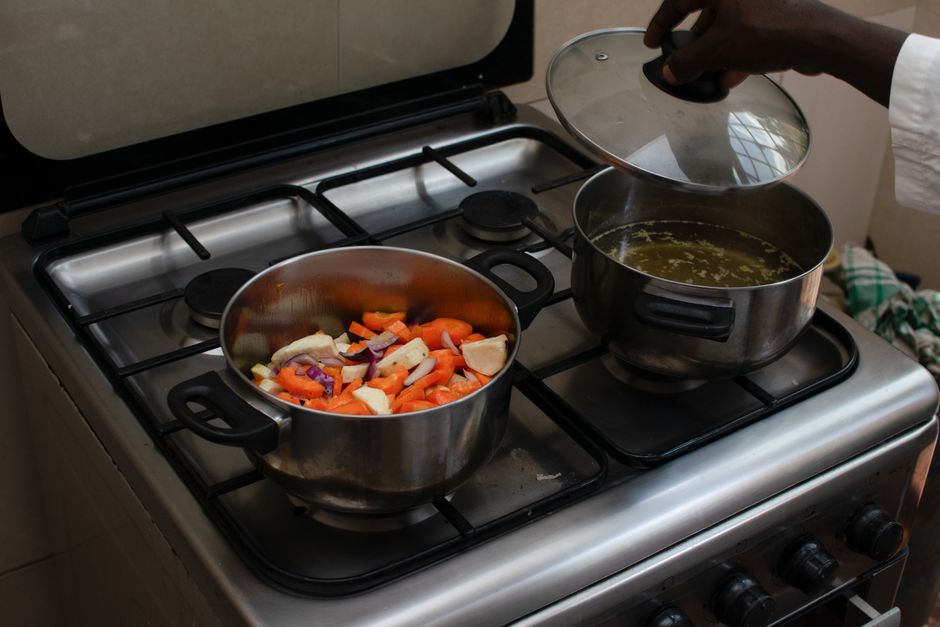
The method is identical for both portion sizes; only the pan and the timing change. Begin by heating the fat in a saucepan over medium heat. Add the onion, carrot, and celery, and cook until the onion turns translucent and the vegetables soften slightly. At the single-serving scale this takes about four to five minutes in a small pan; at the four-serving scale, expect six to eight minutes because the larger mass of vegetables needs more time to heat through.
Add the garlic and stir for about thirty seconds, just until it becomes fragrant. Pour in the diced tomatoes and stir to combine, then add the potato, the broth, and the dried herbs. Bring the pot to a gentle simmer, then lower the heat so the surface moves but does not boil vigorously. A hard boil at the small scale can reduce the liquid noticeably in a short time, so a low simmer is preferable in both cases.
Simmer until the potato is tender when pierced with a knife. For one serving, this usually takes twelve to fifteen minutes; for four servings, allow eighteen to twenty-two minutes. Add the green beans in the final five to seven minutes so they retain some texture. Season with salt and pepper near the end of cooking rather than at the start, since the amount of liquid that evaporates affects how concentrated the seasoning becomes.
- Heat the fat in a saucepan over medium heat.
- Cook the onion, carrot, and celery until softened.
- Add the garlic and stir briefly.
- Add the tomatoes, potato, broth, and herbs.
- Simmer gently until the potato is tender.
- Add the green beans for the last several minutes.
- Season to taste and rest the soup briefly before serving.
Letting the soup sit off the heat for five minutes before serving allows the flavors to settle and makes the portion easier to handle. The rest period matters more at the four-serving scale, where the larger volume holds heat for longer and continues to soften the vegetables after the burner is turned off.
Adjusting Portions Without Losing Balance
Scaling a soup is rarely a matter of pure multiplication. When moving from four servings down to one, the surface area of the pan relative to the volume of liquid increases, which means evaporation happens faster and the soup can become saltier and more concentrated than expected. Using a smaller saucepan, keeping the heat lower, and checking the liquid level partway through cooking are practical ways to compensate. Adding a splash of broth or water near the end can restore a looser consistency if the soup reduces too far.
Moving from one serving up to four introduces the opposite set of considerations. A larger pot recovers heat more slowly, so the initial sauté stage takes longer, and the simmer can be less even around the edges of the pan. Stirring occasionally helps distribute heat. Seasoning also tends to scale imperfectly: doubling salt along with every other ingredient often produces an over-seasoned result, so it is generally better to start with somewhat less than a strict multiplication would suggest and adjust after the vegetables are tender.
Portion calculations are a starting point, not a guarantee; the consistency of the finished soup depends on pan size, heat level, ingredient freshness, and how much liquid evaporates during cooking.
Ingredient substitutions affect portions as well. Denser vegetables such as additional potato absorb more liquid and thicken the soup, while watery vegetables such as zucchini release liquid and thin it. When making substitutions, it helps to keep the total volume of solid vegetables roughly consistent with the original quantities and to adjust the broth afterward rather than before. These adjustments are a matter of observation and taste rather than fixed rules, and results will vary from kitchen to kitchen.
Storage, Reheating, and Practical Notes
Both portion sizes store well, though the single-serving quantity is usually eaten in one sitting. Cool the soup before refrigerating it and keep it in a covered container for up to three or four days. Reheat gently on the stovetop or in a microwave, adding a small amount of broth or water if the vegetables have absorbed liquid during storage. Soups containing potato tend to thicken in the refrigerator, and the texture after reheating is usually softer than when freshly made.
For households that cook for one but prefer not to prepare soup from scratch repeatedly, the four-serving quantities can be made and divided into individual containers. This approach uses the same method and produces a consistent base that can be varied later with additional vegetables, grains, or seasonings. Freezing is possible, though vegetables with high water content may soften further during thawing, which affects texture more than flavor. Labeling containers with the date is a simple way to track how long portions have been stored.
The equipment used also influences results. A thin-bottomed saucepan conducts heat quickly and can scorch the aromatic base at the single-serving scale, while a heavy pot heats more evenly but responds slowly to changes in temperature. Matching pan size to portion size is therefore part of the calculation, not an afterthought. Portion & Pantry recommends measuring the interior of a pot once and noting its volume, which makes it easier to choose the right vessel when moving between one serving and four. With these considerations in mind, the same simple vegetable soup can be prepared reliably at either scale, with quantities adjusted and results reviewed from batch to batch.